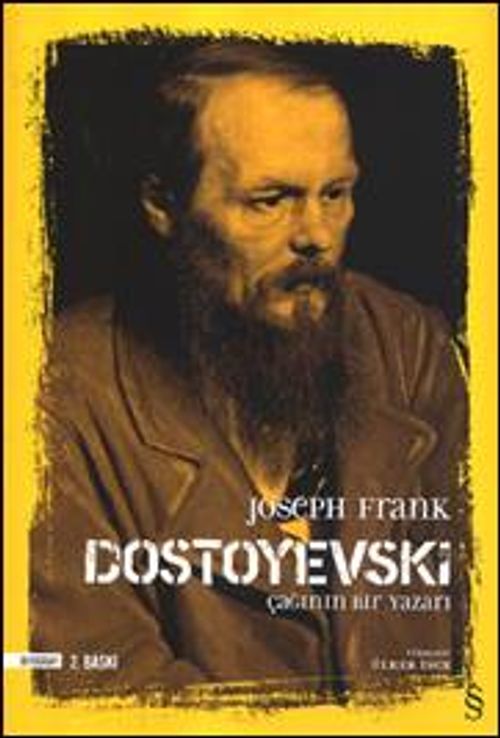
The Reflection of Dostoevsky’s Epilepsy in His Works
Fyodor Dostoevsky suffered from epileptic seizures throughout his life, and this condition directly influenced the psychological depth of the characters in his works, their existential crises, and even the dramatic structure of some scenes. He described seizures as a “sacred disease,” sometimes seeing them as a source of divine inspiration and at other times believing them to be a cursed burden.
- Dostoevsky’s Own Epilepsy Experience
It is said that he had his first seizure in 1839 (at the age of 18) upon receiving news of his father’s death.
His seizures were accompanied by “auras” (precursor symptoms): a momentary rush of euphoria, a feeling of extreme happiness, followed by loss of consciousness.
He experienced depression, shame, and cognitive confusion after the seizures.
Doctors diagnosed him with “grand mal epilepsy.”
- Epileptic Characters in His Works
Dostoevsky transferred these experiences to the characters in his novels, making epilepsy both a physical and metaphysical symbol.
A) “The Idiot” (1869) – Prince Lev Nikolayevich Myshkin
He is the most well-known epileptic character.
Myshkin experiences a moment before a seizure when he is “filled with the harmony of the entire universe”: “To feel eternity in that one second… This feeling can compensate for all the suffering a person has endured throughout their lives.”
These scenes were inspired by Dostoevsky’s own “aura” experiences.
The reason Myshkin is considered a “idiot” is because society cannot understand his “transcendent experiences.”
B) “The Brothers Karamazov” (1880) – Smerdyakov
Smerdyakov, the illegitimate son of Father Karamazov, also suffers from epilepsy.
His seizures are associated with darkness and violence:
One night during his seizure, the murder of Father Karamazov is committed.
Smerdyakov attempts to cover up the murder by using his seizure to “act.”
In this character, epilepsy is linked to moral decline and perversion.
C) “The Possessed” (1872) – Kirillov
There is an indirect connection between Kirillov’s philosophy of suicide and epilepsy.
Through this character, Dostoevsky explores the theme of “suffering in a godless world.”
- Thematic Reflections of Epilepsy
Epilepsy in Dostoevsky’s Works:
Represents the Line Between the Divine and the Demonic
In Myshkin, it is used as a sacred vision and in Smerdyakov, as a demonic pretext.
It Is a Symbol of the Existential Search for Meaning
The “sudden illumination” before a seizure is a metaphor for the human search for meaning.
It Becomes a Cause of Social Exclusion
Epileptic characters (Mishkin, Smerdyakov) are considered “abnormal” by society.
- Medical and Literary Interpretations
Dostoevsky’s seizures can today be described as “temporal lobe epilepsy.”
The term “Dostoyevskian Epilepsy” has entered medical literature (characterized by sudden mystical experiences).
Writers such as Virginia Woolf and Marcel Proust explored this relationship between “illness and creativity.”
Conclusion: The Intertwining of Pain and Creativity
Dostoevsky transformed his epilepsy into a literary force, deepening his characters’ psychic conflicts in this way. In his works, epilepsy is:
A curse and a blessing,
A tool of loneliness and enlightenment,
An experience that pushes the boundaries of the human spirit.
“When my epileptic fit comes, for a moment I feel closest to God… Then darkness falls.”
—From Dostoevsky’s letters
📖 For further reading: Dostoevsky: A Writer’s Diary (his own notes) and Dostoevsky’s Epileptic World (medical-literary review).