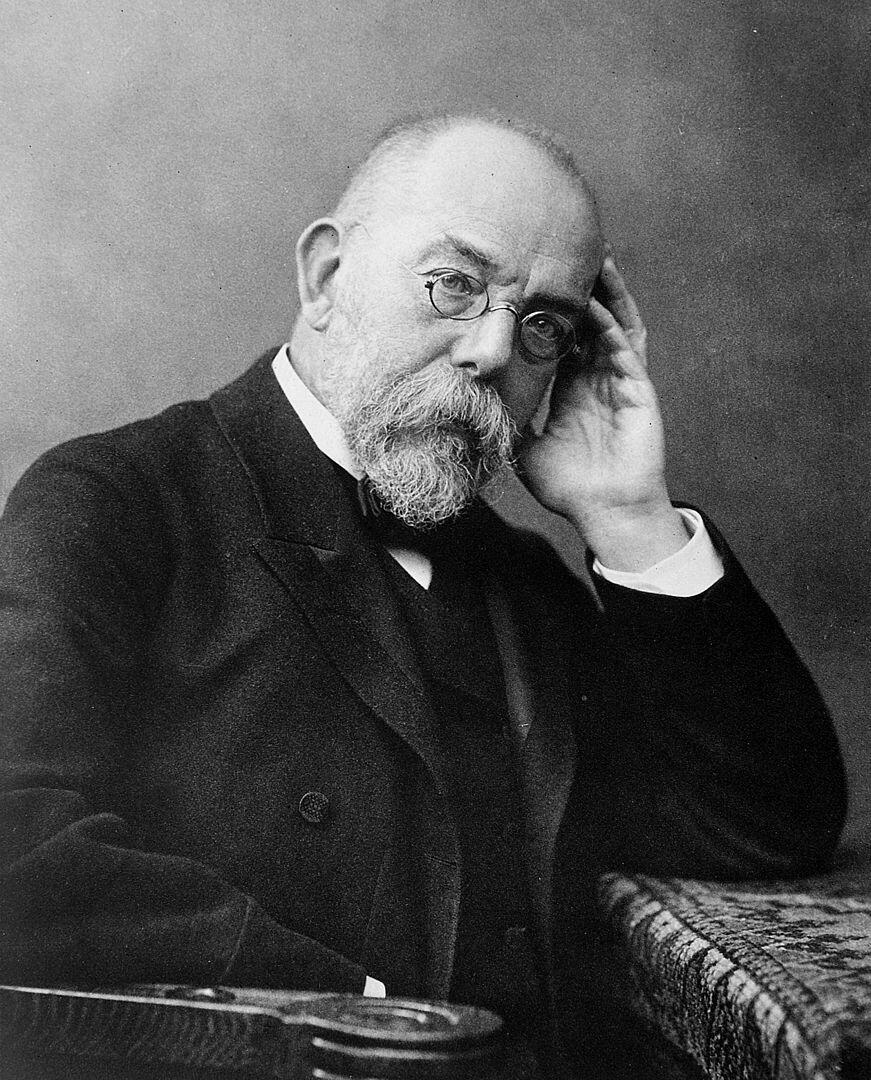
Seeing potatoes in a scientist’s lab today might seem quite surprising. However, in the late 19th century, Robert Koch used potato slices to separate bacteria and obtain pure cultures. This method represented a significant step in the development of modern microbiology. Koch’s fundamental problem wasn’t simply seeing bacteria under a microscope; the real challenge was separating a specific bacterium associated with a disease from other microorganisms. (Nobel Prize)
Therefore, Koch explored solid surfaces alongside liquid media. Sterile potato slices were one of the early solid culture media he used in this quest. When bacteria multiplied on the potato surface, they could form separate colonies. This allowed researchers to more easily distinguish between mixed microorganisms. (PubMed Central (PMC))
However, potatoes weren’t a perfect solution. Many bacteria didn’t thrive sufficiently in this medium. Furthermore, the potato surface didn’t provide suitable nutrient conditions for all microorganisms. Koch therefore turned to more convenient solidifying agents such as gelatin and later agar. (PubMed Central (PMC))
Therefore, the potato in the lab represented much more than just an ordinary food: it was one of the early tools in the quest to isolate bacteria individually and obtain pure cultures.
What Was Robert Koch’s Original Problem?
In the 19th century, the microscope allowed scientists to see bacteria. But seeing a microorganism wasn’t enough to prove that it caused a particular disease.
Koch addressed this problem particularly clearly during his research on anthrax. A disease sample could contain more than one microorganism. Therefore, the researcher needed to separate a particular bacterium from the others.
Liquid culture media posed a significant problem here. Bacteria moved in different directions within the liquid and could mix with each other. This made obtaining pure cultures difficult. Koch sought a solid surface that could physically separate the microorganisms. (PubMed Central (PMC))
That’s where the potato came in.
Why Did the Potato Work?
The potato’s most important advantage was that it provided a solid medium on which bacteria could form separate colonies.
Koch used slices of potato, cut under sterile conditions, to study bacterial growth. Researchers were then able to observe the different colonies that emerged on the surface. This made it possible to study isolated growth areas rather than a complex microbial community within a single liquid culture. (ScienceDirect)
This approach created a significant shift in thinking in microbiology:
It was necessary to isolate the bacteria, rather than simply observe them.
The use of a solid surface was therefore of great importance in Koch’s work. The idea of colony isolation, still fundamental in modern microbiology, developed through these early experimental approaches. (ASM Journals)
What Did Koch See on the Potato?
A key observation for Koch was that bacteria could form separate colonies on solid surfaces.
When a bacterial cell multiplies under suitable conditions, it can eventually form a colony visible to the naked eye. When these colonies are separated, the researcher can select different groups of microorganisms and transfer them to new cultures.
This approach played a significant role in the development of the concept of “pure culture.” Koch’s goal wasn’t simply to get bacteria to multiply. It was to isolate a particular bacterium from other microorganisms and study its characteristics separately. (PubMed Central (PMC))
However, the potato had a serious limitation. Not all bacteria thrived on the potato in the same way. Therefore, Koch needed a more general and controlled culture medium.
Why Wasn’t the Potato Sufficient?
The potato provided a simple and convenient starting point. However, standardization is crucial in scientific experiments.
The structure of the potato wasn’t the same in every slice. Furthermore, the nutrients it contained didn’t meet the needs of different bacteria. Some microorganisms thrived on the potato, while others did not. Indeed, in his search for a solid culture medium, Koch tried other substances besides potatoes, such as egg albumin and starch paste. (PubMed Central (PMC))
These experiments led Koch to a more controlled system.
Gelatin first became a significant alternative. Koch tried to obtain a solid medium by adding gelatin to the nutrient liquid culture. This made it easier to separate the bacteria on a flat surface. (PubMed Central (PMC))
However, gelatin was not the ideal solution in the long run.
Why Didn’t Gelatin Completely Solve the Problem?
Gelatin had a significant disadvantage: it melted at high temperatures.
Many disease-causing bacteria thrive better at approximately human body temperature. Therefore, when the researcher wanted to keep the cultures around 37°C, gelatin could not maintain its solid structure. Also, some bacteria could break down gelatin. (PubMed Central (PMC))
Therefore, researchers in Koch’s lab continued to search for a more suitable substance.
Fanny Hesse played an important role here. Walther Hesse’s wife, Fanny Hesse, suggested that agar, derived from seaweed, could be a suitable solidifying agent. Agar offered a significant advantage because it was more resistant to high temperatures and not easily broken down by many bacteria. (PubMed Central (PMC))
Thus began a significant transition from potatoes in the lab to modern agar media.
From Potatoes to Agar: A Major Change in Microbiology
Koch’s experiments show that scientific progress often doesn’t happen in the form of a single “great invention.”
First, researchers tried readily available materials. Potatoes were important for this reason. Then gelatin was used. After that, agar emerged as a more useful solidifying agent. (PubMed Central (PMC))
Each of these developments sought to answer the same fundamental question:
How can we separate intermingling bacteria?
Agar provided a much more successful answer to this question. Researchers were able to dissolve nutrients in agar, creating a transparent, solid surface on which bacteria could thrive. This made it easier to observe and separate different colonies. (ASM Journals)
Where Does the Petri Dish Fit into This Process?
The Petri dish, which comes to mind when microbiology is mentioned today, emerged as a continuation of the culture techniques developed by Koch.
In 1887, Julius Richard Petri transformed the flat glass plates in Koch’s laboratory into a more convenient container. The lidded structure of the Petri dish better protected the culture medium from external microorganisms. It also made it easier for researchers to observe colonies. (PubMed Central (PMC))
The Petri dish we see in laboratories today is therefore not entirely disconnected from Koch’s experimental exploration that began with potatoes.
The development in the form of potato → gelatin → agar → Petri dish shows the historical line of methods for growing and separating bacteria in a controlled manner.
Why is Robert Koch’s Potato Experiment Important in the History of Science?
The importance of the potato experiment lies not in the potato itself, but in the experimental logic developed by Koch.
Koch noticed the problem of bacteria mixing together in liquid media. He then tried to separate microorganisms using a solid surface. This method allowed bacteria to be studied in separate colonies.
This approach reinforced one of the fundamental principles of microbiology: obtaining pure cultures.
Thanks to pure cultures, researchers were able to study the morphology, growth characteristics, and disease associations of a particular microorganism more systematically. Koch’s solid culture techniques are therefore considered one of the turning points in the development of modern bacteriology. (ScienceDirect)
Furthermore, these methods provided a strong experimental basis for Koch’s work in identifying disease agents.
Koch’s Potato: A Lesson in the History of Science
Robert Koch’s potato in his laboratory is a beautiful example of scientific creativity.
Koch didn’t expect expensive or complex technology. Instead, he explored how simple materials at his disposal could be used to solve a scientific problem. The potato, therefore, holds a small but significant place in the history of microbiology.
However, Koch’s real achievement wasn’t using potatoes. It was transforming the problem of separating bacteria into an experimental problem and seeking systematic solutions to it.
Ultimately, potatoes gave way to gelatin, and gelatin, in turn, to the more convenient agar. Then came laboratory tools like Petri dishes. This process formed the basis of modern microbiological culture methods. (PubMed Central (PMC))
When we look at a bacterial colony in a seemingly ordinary Petri dish today, we actually see the continuation of a long experimental tradition that began in 19th-century laboratories.
References
Koch, R. (1881). Zur Untersuchung von pathogenen Organismen. Berlin.
Brock, T. D. (1999). Robert Koch: A Life in Medicine and Bacteriology. American Society for Microbiology.
Gradmann, C. (2009). Robert Koch and the pressure of scientific research. medical history
Nobel Prize. Robert Koch – Biographical. (Nobel Prize)
Lechevalier, H. A., & Solotorovsky, M. (1965). Three Centuries of Microbiology. McGraw-Hill.
Prescott, L. M., Harley, J. P., & Klein, D. A. Microbiology. McGraw-Hill.
Atlas, R. M. (2010). Handbook of Microbiological Media. CRC Press.
Evolution of bacterial and fungal growth media. Clinical Microbiology Reviews. (PubMed Central (PMC))
Current and Past Strategies for Bacterial Culture in Clinical Microbiology. Clinical Microbiology Reviews. (ASM Journals)