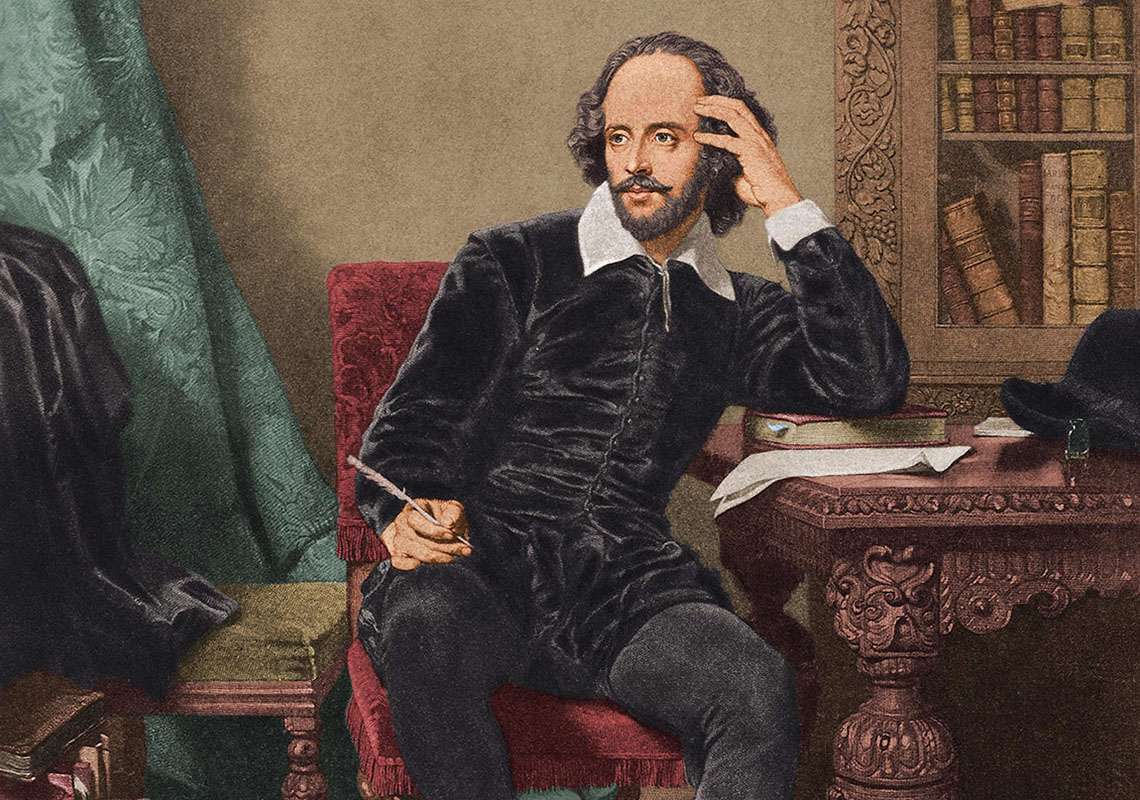
Introduction: Shakespeare and the Legacy of the Classical World
William Shakespeare’s literature maintains a strong relationship with the classical Greek and Roman worlds. Shakespeare did not use ancient texts merely as sources for plots. He also incorporated myths, historical narratives, tragic conventions, and character models into his dramatic universe. In doing so, he reinterpreted the classical heritage within the cultural environment of Renaissance England.
Shakespeare’s relationship with classical sources can be traced particularly through Ovid, Plutarch, Seneca, Plautus, Terence, and Virgil. Greek mythology and Homeric traditions also left important traces in his works. Research published by Oxford University Press indicates that Shakespeare encountered many classical texts through contemporary English translations. Arthur Golding’s translation of Ovid and Thomas North’s translation of Plutarch hold particular importance in this context.
Therefore, it would be insufficient to explain Shakespeare’s relationship with the classical world simply through the concept of “influence.” Shakespeare often combined different sources, transformed them, and created new dramatic meanings.
How Did Shakespeare Learn Classical Literature?
Shakespeare’s education in Stratford-upon-Avon probably gave him substantial exposure to classical languages and literature. Grammar-school education during the period emphasized Latin grammar, rhetoric, and the reading of classical authors. This education provided an important foundation for Shakespeare’s later literary career.
Ovid, Virgil, and Plautus stand out among the Latin authors who played a role in Shakespeare’s engagement with classical culture. Research on Shakespeare and the classics identifies Ovid, Virgil, Plautus, and possibly Seneca among the important writers whom Shakespeare may have encountered during his school years.
However, Shakespeare’s knowledge of Greek remains uncertain. Some scholars consider his knowledge of Greek limited. Nevertheless, this did not prevent him from drawing on Greek literature. Renaissance readers could access classical works through Latin, Italian, and English translations. Consequently, Greek literary traditions could reach Shakespeare through several intermediary channels.
Ovid: One of Shakespeare’s Most Important Classical Sources
To understand Shakespeare’s relationship with the classical world, Ovid deserves particular attention. Ovid’s Metamorphoses exerted a powerful influence on Shakespeare’s poetic and dramatic imagination.
Themes such as transformation, love, desire, violence, and changes of identity appear frequently in Shakespeare’s engagement with Ovid. Shakespeare did not simply reproduce Ovidian myths. Instead, he reorganized them for dramatic purposes.
A Midsummer Night’s Dream and Pyramus and Thisbe
One of the clearest examples appears in A Midsummer Night’s Dream. The story of Pyramus and Thisbe connects directly with Ovid’s Metamorphoses. Shakespeare transforms a tragic love story into a comic theatrical performance.
Shakespeare therefore does more than borrow a mythological story. He also explores the boundaries between tragedy and comedy. In his hands, Ovid’s story becomes an ironic reflection on theatrical performance itself.
Titus Andronicus and Ovid
Ovidian influence takes a darker form in Titus Andronicus. Lavinia’s use of Metamorphoses to express her experience of violence brings a classical text directly into the dramatic structure of the play.
Jonathan Bate argues that Shakespeare’s use of Ovid involves more than borrowing plots. Shakespeare also adapts Ovid’s ideas about transformation and narrative technique.
For this reason, Ovid functions not merely as a source for Shakespeare but also as a model of storytelling.
Plutarch: Turning History into Dramatic Characters
Plutarch occupies a particularly important position in Shakespeare’s engagement with classical Greek and Roman history. Shakespeare drew extensively on Plutarch’s Parallel Lives for Julius Caesar, Antony and Cleopatra, and Coriolanus.
Shakespeare largely encountered Plutarch through Thomas North’s English translation, first published in 1579. His relationship with Plutarch therefore developed primarily through Renaissance translation culture rather than through direct engagement with the original Greek text.
Julius Caesar and Plutarch
Julius Caesar provides one of the clearest examples. Shakespeare drew many details concerning Caesar’s assassination, the relationship between Brutus and Cassius, the Battle of Philippi, and Brutus’s personal life from Plutarch.
However, Shakespeare did not simply reproduce Plutarch’s historical narrative. He condensed biographical details and transformed them into political conflicts suitable for the stage.
This approach reveals an important characteristic of Shakespeare’s method:
He does not merely retell history; he dramatizes history.
Seneca and the Influence of Roman Tragedy
Seneca represents another important classical influence on Shakespeare’s tragedies. As a major figure in Roman tragedy, Seneca developed themes involving revenge, violence, ghosts, guilt, and psychological conflict.
Scholars have emphasized the importance of Senecan tragedy for Shakespeare, particularly in relation to revenge, supernatural elements, and representations of violence.
This influence appears in different ways in plays such as Hamlet, Titus Andronicus, and Macbeth. Shakespeare combines the dark atmosphere of Senecan tragedy with the dynamic conventions of the English stage.
Revenge, for example, does not function merely as an external action in Shakespeare. It also generates intense psychological conflicts within his characters. Shakespeare consequently transforms the classical revenge model into a more complex form of psychological drama.
Plautus and Shakespeare’s Approach to Comedy
Shakespeare also drew extensively on Roman comedy. Plautus occupies a particularly significant place in this aspect of his work.
The Comedy of Errors draws heavily on Plautus’s Menaechmi. Shakespeare uses identical twins, mistaken identities, misunderstandings, and rapid reversals to construct a highly energetic comic structure.
Nevertheless, Shakespeare does not simply imitate Plautus. He combines the mechanical misunderstandings of Roman comedy with the linguistic wit and theatrical conventions of Renaissance England.
As a result, the classical comic model becomes a more complex world of character, language, and theatrical performance in Shakespeare’s hands.
How Did Greek Mythology Influence Shakespeare’s Imagination?
Shakespeare’s classical sources extend beyond Roman authors. Greek mythology also occupies an important place in the symbolic and dramatic world of his plays.
For example, A Midsummer Night’s Dream introduces figures such as Theseus and Hippolyta, both of whom come from Greek mythology. Shakespeare also combines different classical traditions to construct a new dramatic universe.
Similarly, Troilus and Cressida draws on the traditions surrounding the Trojan War, while Pericles connects with narratives associated with ancient Greek literature.
Several plays in Shakespeare’s approximately forty-play corpus take place within or draw significantly upon the ancient Greek and Roman worlds.
Therefore, the classical world does not function merely as a historical setting for Shakespeare. He uses it as a framework for examining human nature.
Why Did Shakespeare Rewrite Classical Texts?
The most important feature of Shakespeare’s relationship with classical literature involves his method of rewriting. Shakespeare often retained the basic plot of a classical source while changing the psychology, dialogue, and dramatic function of its characters.
Ovid’s myths provide a clear example. Plutarch’s biographies undergo a similar transformation. Shakespeare turns historical figures from biographical narratives into dramatic characters engaged in political and personal conflicts.
Moreover, Shakespeare rarely relied on a single source. Scholars have shown that individual plays often draw upon several literary and historical sources. This practice makes it difficult to identify a single classical origin for many elements in his plays.
For this reason, Shakespeare’s method can more accurately be described through the concepts of adaptation, synthesis, and reinterpretation.
Why Was Classical Literature Important to Shakespeare?
Shakespeare did not simply take stories from classical literature. Classical texts also provided him with an extensive intellectual framework for examining human behavior.
Love, power, war, revenge, jealousy, death, fate, morality, and politics constitute some of the central concerns that Shakespeare explored through classical narratives.
His engagement with classical literature therefore reflects more than literary imitation. Shakespeare adapted the classical heritage to the intellectual, political, and cultural concerns of the Renaissance.
References
- Bate, Jonathan. Shakespeare and Ovid. Oxford: Clarendon Press, 1994.
- Halpern, Richard. “The Classical Inheritance.” In The Oxford Handbook of Shakespearean Tragedy. Oxford University Press, 2016.
- Martindale, Charles, and A. B. Taylor, eds. Shakespeare and the Classics. Cambridge University Press.
- Miola, Robert S. Shakespeare and Classical Tragedy: The Influence of Seneca. Oxford: Clarendon Press, 1992.
- Ovid. Metamorphoses.
- Plautus. Menaechmi.
- Plutarch. Lives of the Noble Grecians and Romans. Translated by Thomas North, 1579.
- Seneca. Tragedies.
- Shakespeare, William. A Midsummer Night’s Dream.
- Shakespeare, William. Antony and Cleopatra.
- Shakespeare, William. Coriolanus.
- Shakespeare, William. Julius Caesar.
- Shakespeare, William. Titus Andronicus.
- Shakespeare, William. The Comedy of Errors.