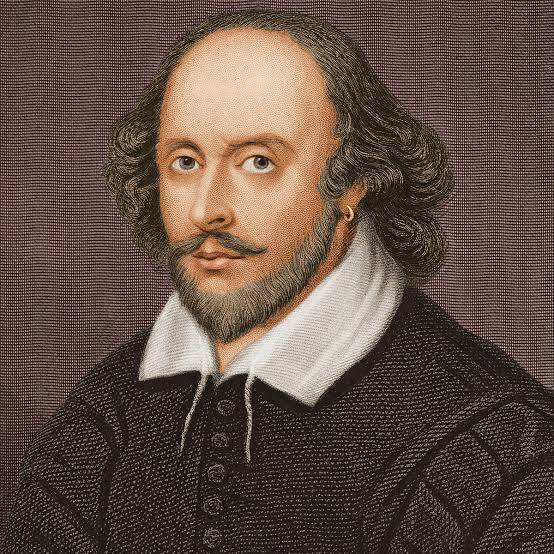
William Shakespeare does not present the English monarchy as a one-dimensional political ideal. On the one hand, he recognizes the importance of kingship for social and political order. On the other hand, he explores the destruction caused by poor leadership, struggles for the throne, and crises of legitimacy. His history plays, particularly Richard II, Henry IV, Henry V, and Richard III, provide the clearest examples of this approach. Shakespeare does not treat English history merely as a record of past events. Instead, he uses historical figures and conflicts to examine the nature of political power and authority.
Shakespeare therefore does not simply ask whether monarchy represents a good or bad form of government. Instead, he focuses on several fundamental questions: What makes a king legitimate? How should a monarch exercise power? What happens when a ruler fails to fulfill his political and moral responsibilities? These questions make Shakespeare’s understanding of monarchy considerably more complex than a simple defense of royal authority.
Monarchy in Shakespeare’s Historical Context
Shakespeare lived during the reigns of Elizabeth I and James I. Consequently, he wrote in an environment where royal authority, questions of succession, and political stability remained highly significant.
Elizabeth I had no children, which created uncertainty about the future succession. At the same time, religious divisions following the Reformation and England’s conflicts with European powers made political stability particularly important.
Peter Lake emphasizes the importance of succession and legitimacy in the political culture surrounding Shakespeare’s history plays. Shakespeare’s historical dramas therefore cannot be separated completely from the political concerns of his own period.
When Shakespeare places medieval kings on the stage, he consequently does more than reconstruct the past. He also uses historical conflicts to explore political questions that mattered to his contemporary audience.
Richard II: A Legitimate King and a Poor Ruler
Richard II provides one of the clearest examples of Shakespeare’s approach to monarchy.
Richard possesses a legitimate hereditary claim to the English throne. Shakespeare, however, does not equate legitimate succession with effective government. Richard has the right to rule, yet he repeatedly demonstrates serious political weaknesses. He relies heavily on the symbolic authority of kingship and fails to recognize the responsibilities that accompany political power.
The Folger Shakespeare Library notes that Richard understands his authority through the concept of divine kingship. He treats opposition to his rule not simply as a political challenge but as an attack on a sacred institution.
Shakespeare consequently establishes an important distinction:
Having a legitimate claim to the throne does not necessarily make someone a good king.
This distinction lies at the heart of Shakespeare’s political thought.
Richard II and Divine Kingship
Richard II also examines the doctrine of the divine right of kings. Richard almost completely identifies his personal identity with the institution of kingship. Consequently, he treats the sacred status of the throne as inseparable from his own political authority.
Shakespeare nevertheless questions this assumption.
Richard’s downfall demonstrates that political legitimacy cannot depend entirely on hereditary succession or divine symbolism. A monarch must also demonstrate political responsibility and competence.
Shakespeare therefore does not simply reject the sacred dimension of monarchy. Instead, he places royal authority alongside the obligations that accompany it.
The Deposition of Richard II: Why Was Shakespeare So Bold?
One of the most striking elements of Richard II concerns Richard’s removal from the throne. Shakespeare transforms the loss of royal authority into a dramatic confrontation over legitimacy and political power.
The deposition scene also carried strong political implications during Elizabeth I’s reign. Some early editions omitted the scene, and scholars have long connected this omission with contemporary censorship. Furthermore, a special performance of Richard II shortly before the Essex Rebellion intensified the political controversy surrounding the play.
However, we should not conclude with certainty that Shakespeare intended a direct criticism of Elizabeth I. A more cautious interpretation suggests that the play explores broader questions concerning political legitimacy, succession, royal authority, and the fragility of political power.
Henry IV: Legitimacy and Political Responsibility
The Henry IV plays take the question of monarchy in a different direction.
Henry IV originally rises to power as Bolingbroke and eventually replaces Richard II. Shakespeare therefore places the problem of political legitimacy directly at the center of the drama.
Henry’s fundamental problem does not simply concern his status as king. It also concerns how he became king.
His political past creates anxiety about the stability of his rule. He fears rebellion because his own accession involved the removal of another monarch.
Shakespeare consequently creates an important paradox:
A government established through a crisis of legitimacy may spend much of its existence trying to secure its own legitimacy.
Henry V: Ideal King or Political Strategist?
Henry V presents one of the most complicated images of kingship in Shakespeare’s works.
Henry transforms himself from a young prince associated with disorder into a powerful monarch. His speeches, especially before the Battle of Agincourt, emphasize leadership, national unity, and the relationship between king and soldier.
Nevertheless, Shakespeare does not portray Henry simply as a heroic ruler. The play also reveals the human and political costs of war. The magnificent rhetoric of national unity exists alongside scenes that expose the violence and consequences of military conflict.
Two interpretations can therefore coexist:
- Henry represents the successful and powerful English monarch.
- Henry also represents a sophisticated political strategist who understands the power of rhetoric and national identity.
Shakespeare allows both interpretations to remain within the same dramatic structure.
Henry V and English National Identity
Henry V also explores the relationship between monarchy and national identity.
Henry’s campaign in France represents more than the military ambitions of a monarch. It also contributes to the construction of a shared English identity.
Michael Neill draws attention to Shakespeare’s extensive use of terms such as “England,” “English,” and “Englishman.” The play consequently connects royal authority with an emerging conception of national community.
Shakespeare therefore establishes a strong relationship between monarchy and national identity. At the same time, he reveals how warfare and political rhetoric can help construct that identity.
Richard III: The Legitimation of Tudor Rule
Richard III occupies a particularly important position in Shakespeare’s treatment of monarchy.
Richard III uses murder, manipulation, and political intrigue to obtain the crown. Shakespeare presents him not merely as a bad monarch but as an extreme example of political ambition without moral restraint.
At the end of the play, Henry Tudor defeats Richard and becomes the founder of the Tudor dynasty as Henry VII.
This structure corresponds closely with the Tudor historical tradition, which portrayed Richard as a tyrant. Shakespeare draws on this tradition but also gives Richard extraordinary dramatic power. As a result, the character becomes more than a simple political villain.
Richard’s intelligence, theatricality, and charisma make him one of Shakespeare’s most memorable political figures. His complexity therefore prevents the play from functioning merely as Tudor propaganda.
Did Shakespeare Support the Monarchy?
A simple “yes” or “no” answer would not accurately describe Shakespeare’s political thought.
In Shakespeare’s works, monarchy often represents an important element of political and social order. Nevertheless, Shakespeare does not praise every king in the same way.
Richard II possesses legitimate authority but governs poorly.
Henry IV exercises political strength but remains troubled by the questionable origins of his accession.
Henry V represents successful kingship but also raises difficult questions about war and political propaganda.
Richard III represents the destructive consequences of unchecked political ambition.
This comparison suggests that Shakespeare’s primary concern lies less with the question “Is monarchy good?” and more with the question “What makes a good king?”
Macbeth: Regicide and Political Disorder
Shakespeare’s treatment of monarchy does not end with his English history plays. Macbeth also provides an important examination of kingship, particularly in the political context of James I’s reign.
James I became king of England in 1603. His accession brought a Scottish monarch to the English throne, while Shakespeare’s theatrical company received royal patronage and became known as the King’s Men.
In Macbeth, Duncan’s murder represents more than an individual act of violence. Shakespeare connects regicide with the disruption of political, moral, and even cosmic order.
Macbeth murders Duncan because he wants the crown. Once he becomes king, however, he must commit further acts of violence to protect his position.
Shakespeare therefore presents a powerful political principle:
Power acquired without legitimate authority often requires continuous violence to preserve itself.
Macbeth and the Problem of the Good King
Shakespeare does not merely portray a tyrant in Macbeth. He also explores the qualities of a legitimate ruler.
Malcolm provides an alternative model of kingship. Through him, the play suggests that a monarch needs more than courage and military strength. Justice, moderation, responsibility, and concern for the well-being of the kingdom also matter.
In this sense, Macbeth complements Shakespeare’s history plays. The drama examines the consequences of political ambition while also defining the qualities that distinguish legitimate kingship from tyranny.
Henry VIII: A Monarchy in Crisis
Shakespeare’s final history play, Henry VIII, presents another dimension of monarchy.
The play focuses not only on the king but also on the political networks surrounding the royal court. The rise and fall of Cardinal Wolsey demonstrates how power operates within the royal household.
The conflict between nobles and Wolsey, accusations of treason, and political manipulation reveal the instability of court politics.
Shakespeare therefore does not present the monarchy as a perfectly harmonious institution. Instead, he depicts the royal court as a complex political environment in which ambition, loyalty, power, and personal interests constantly interact.
The Main Features of Shakespeare’s Understanding of Monarchy
When we examine Shakespeare’s works together, several fundamental principles emerge.
1. Legitimacy Matters
Shakespeare pays close attention to how a king acquires the throne. However, hereditary succession alone does not guarantee good government.
2. The Moral Character of the King Matters
A successful ruler must possess more than political strength. Justice, moderation, and responsibility also define good kingship.
3. Power Can Corrupt
Richard III and Macbeth demonstrate how personal ambition can destroy political and social order.
4. Royal Authority Is Not Absolute
Richard II reveals the tension between the sacred status of kingship and the political responsibilities of the monarch.
5. Monarchy Can Become Connected to National Identity
Henry V links royal leadership with the development of English national consciousness.
6. Shakespeare Avoids Simple Political Judgments
Shakespeare’s political world contains contradictions. Consequently, reducing his plays to a single ideology of monarchy would overlook their complexity.
References
- Lake, Peter. How Shakespeare Put Politics on the Stage: Power and Succession in the History Plays. New Haven: Yale University Press, 2017.
- Clare, Janet. “The Censorship of the Deposition Scene in Richard II.” Review of English Studies 41, no. 161 (1990): 89–94.
- Neill, Michael. “A Modern Perspective: Henry V.” Folger Shakespeare Library.
- Mowat, Barbara A., and Paul Werstine, eds. “About Shakespeare’s Richard II.” Folger Shakespeare Library.
- Mowat, Barbara A., and Paul Werstine, eds. “About Shakespeare’s Henry VIII.” Folger Shakespeare Library.
- Mowat, Barbara A., and Paul Werstine, eds. “About Shakespeare’s Macbeth.” Folger Shakespeare Library.
- Rackin, Phyllis. “A Modern Perspective: Richard III.” Folger Shakespeare Library.
- Syme, Holger Schott. Theatre and Testimony in Shakespeare’s England. Cambridge: Cambridge University Press, 2012.