19th-century Russian literature is not only a field of aesthetic production but also a textual laboratory of political, philosophical, and ethical conflicts. Turgenev’s Fathers and Sons , Chernyshevsky’s What Is to Be Done?, and Dostoevsky’s Crime and Punishment are among the most critical texts in this laboratory. This study examines these three novels as links in an ideological chain, investigating how the conception of humanity in Russian thought clashes through the concepts of nihilism, rationality, utilitarianism, and moral transgression. In particular, the establishment of “crime” in Crime and Punishment not only as a legal but also as a metaphysical transgression is evaluated in the context of a polemic with Chernyshevsky’s rationalist utopia.
1. Introduction: The Tradition of Polemics in the Russian Novel
19th-century Russian novels, unlike the Western novel tradition, possess a directly ideological character. As Isaiah Berlin emphasizes, in the Russian intellectual tradition, literature functions as a substitute for philosophy and politics (Berlin, 1994). In this context, there is a chronological as well as intellectual struggle between Turgenev’s Fathers and Sons (1862), Chernyshevsky’s What Is to Be Done? (1863), and Dostoevsky’s Crime and Punishment (1866).
These texts produce not only characters, but also models of how humans should live. Therefore, the relationship between them is more ethical and ideological than aesthetic.
2. Fathers and Sons: The Birth of Nihilism
In Turgenev’s Fathers and Sons , the character Bazarov is the first systematic “nihilist” type in Russian literature. For Bazarov, tradition, morality, art, and metaphysics are worthless. Everything except scientific utility should be rejected (Turgenev, 2009).
Bazarov’s worldview is based on three fundamental principles:
- Rejection of everything irrational
- Disregarding emotions
- Social utilitarianism
However, rather than idealizing Bazarov, Turgenev reveals his internal contradictions. His defeat by love, his helplessness in the face of death, demonstrate the destructive nature of pure rationalism. Thus, the novel both produces and criticizes nihilism.
At this point , Fathers and Sons provides a direct foundation for Chernyshevsky.
3. How to Do It?: Rational Utopia and the New Man
Chernyshevsky’s novel * What Is to Be Done? * is an ideological manifesto against Turgenev’s hesitant nihilism. At the heart of the novel is “rational egoism.” A person will behave morally when they understand their own self-interest scientifically (Chernyshevsky, 1989).
Vera Pavlovna and Rahmetov are prototypes of the new society. Calculation, not emotion, and utility, not conscience, are paramount. According to Chernyshevsky:
“When a person knows the truth, they do not do evil.”
In this approach, crime is a technical error, not a metaphysical one. If people are properly educated, crime will disappear. This understanding would later be transformed into a theory of revolutionary consciousness by Lenin (Service, 2000).
But for Dostoevsky, it is precisely this rationality that obscures the tragedy of human nature.
4. Crime and Punishment: Violation, the Overman, and Conscience
Dostoevsky’s Crime and Punishment is an implicit polemic against Chernyshevsky. Raskolnikov’s theory is a dark version of Chernyshevsky’s model of the rational human being.
According to Raskolnikov, people are divided into two categories:
- Ordinary people
- Extraordinary
An extraordinary person can break the law (Dostoyevsky, 2011).
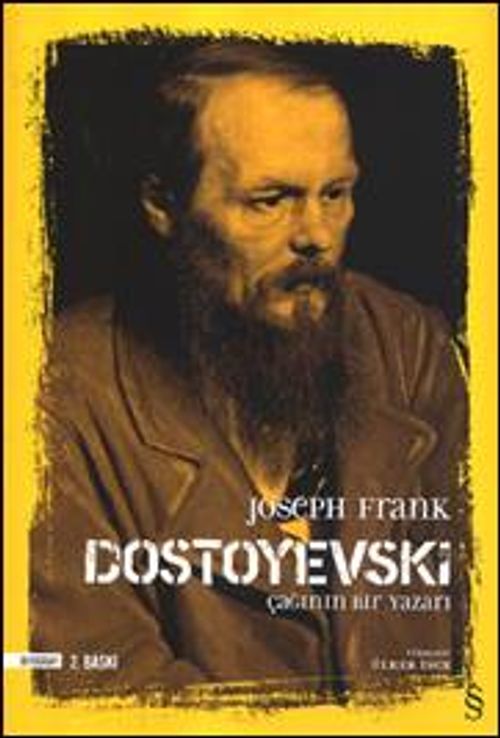
The “crime” here, in the Russian concept of prestuplenie , is not only a legal but also an ontological violation. That is, Raskolnikov transgresses not only against a human being but against the very limits of being human. Joseph Frank explains this point as follows:
“Raskolnikov’s murder is not an ethical experiment, but a metaphysical one.” (Frank, 1995)
Raskolnikov attempts to put Chernyshevsky’s rational utopia into practice and fails. Conscience cannot be silenced by rational calculation. Thus, Dostoevsky shatters the idea of the “new man.”
5. Dialectical Conflict Between Three Texts
There is an implicit dialectic between these three works:
| Text | Human Model | Concept of Crime |
|---|---|---|
| Fathers and Sons | Scientific nihilist | Rejection of traditional morality |
| How to do it? | Rational revolutionary | Technical error |
| Crime and Punishment | fragmented individual | Metaphysical violation |
Turgenev asks the question, Chernyshevsky answers, Dostoevsky undermines the answer. In this chain , Crime and Punishment demonstrates the devastation that ideological utopia inflicts on the human soul.
In Bakhtin’s words, Dostoevsky’s novel is “polyphonic”; there is no single truth, consciousnesses clash (Bakhtin, 1984). Therefore, Crime and Punishment is not merely a murder novel, but a philosophical laboratory on the moral crisis of modern man.
In summary
The ongoing struggle between Fathers and Sons , What Is to Be Done?, and Crime and Punishment demonstrates how ideology and literature intertwine in Russian novels. Turgenev produces nihilism, Chernyshevsky systematizes it, and Dostoevsky reveals the wound it inflicts on the human soul.
In this context , Crime and Punishment is not merely a narrative of individual crime, but a dramatization of the ethical collapse of rational utopia. Raskolnikov is the tragic real-world counterpart of the man in Chernyshevsky’s imagination.
Source
Bakhtin, M. (1984). Problems of Dostoevsky’s Poetics . University of Minnesota Press.
Berlin, I. (1994). Russian Thinkers . Penguin Books.
Chernyshevsky, N. (1989). What Is to Be Done? Cornell University Press.
Dostoyevsky, F. (2011). Crime and Punishment . (Trans. M. Özgül). İletişim Publications.
Frank, J. (1995). Dostoevsky: The Miraculous Years . Princeton University Press.
Service, R. (2000). Lenin: A Biography . Harvard University Press.
Turgenev, I. (2009). Fathers and Sons . (Translated by S. Eyüboğlu). Türkiye İş Bankası Publications.